
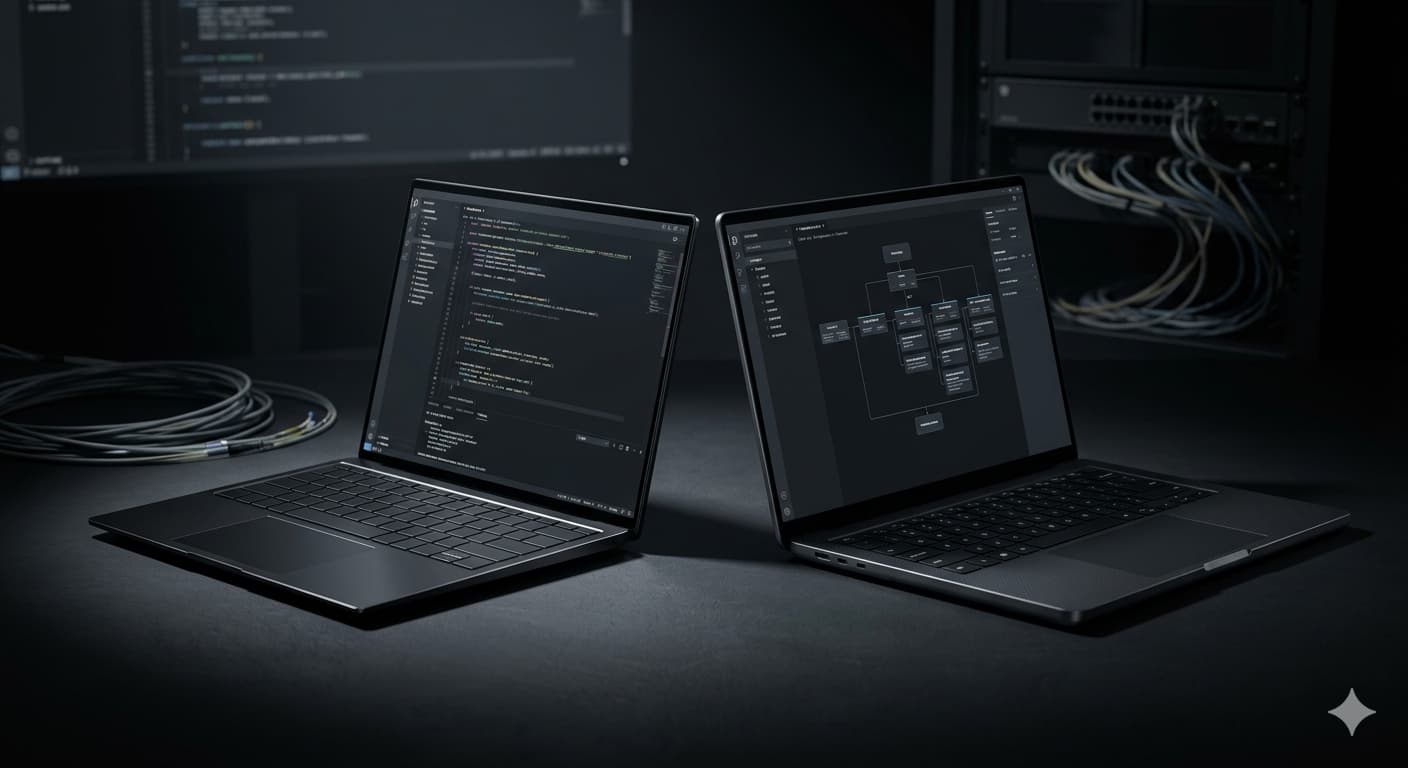
A Quiet Comeback in the Premium Laptop Space
For a while now, premium Windows laptops have felt… a bit forgettable. Not bad, just not exciting. If you’ve been thinking about buying a high-end laptop, chances are your mind went straight to a MacBook, but the Dell XPS 14 and 16 (2026) might change that.
That’s the space Dell Technologies is trying to step back into, and honestly, it feels different this time.
Instead of just updating specs and calling it a day, Dell seems to be trying to fix something deeper. That “why would I choose this over a MacBook?” question.
What Dell Just Launched
So here’s the update. Dell has launched the XPS 14 and XPS 16.
These aren’t entry-level machines.
You’re looking at laptops made for people who:
- Edit videos
- Design stuff
- Keep 20 tabs open without thinking
Or maybe you just want something that feels premium every time you open it, and that counts too.
What Actually Makes These Laptops Stand Out
The display is hard to ignore
The OLED screen is the first thing you notice; the colors pop, blacks look deep, and even simple things like scrolling feel smoother.
You don’t need to know the specs to feel the difference.
It finally feels… premium
This part surprised me a bit.
The build is clean with no unnecessary design tricks, just solid aluminum, a thin body, and really slim bezels.
For once, a Windows laptop doesn’t feel like a compromise next to Apple Inc., and that’s saying something.
Performance is more than just speed now
These laptops run on Intel’s newer Core Ultra AI chips.
Yes, they’re fast, but that’s expected.
What’s more interesting is how they handle tasks in the background. Things feel smoother, and a bit smarter too, and some of that is because of the AI features built into the chip. The industry is moving towards AI, and you can see this shift clearly in AI laptop chips.
It’s subtle right now, but you can tell where things are going.
XPS vs MacBook – The Real Comparison
Let’s be honest. If you’re even considering this laptop, you’re probably comparing it to a MacBook.
So here’s the simple version.
XPS gives you:
- More ports (finally)
- A bit more freedom with software
- OLED displays that look really good
MacBook still has:
- Better battery life
- Tighter ecosystem
- That “it just works” feeling
So yeah, it’s not a clear win either way. But the gap? It’s not as wide as it used to be.
Why This Launch Matters
I think this part gets overlooked sometimes.
More people are now spending serious money on laptops. Not just for work, but for content, freelancing, and even learning new skills.
Earlier, if you had the budget, you just went for a MacBook. Simple decision.
Now? It’s not that simple anymore.
Dell is giving you another option that actually feels worth considering.
The Bigger Shift: AI Laptops Are Here
There’s also a bigger trend quietly building in the background.
Laptops are starting to feel less like machines and more like assistants. Small things for now: smarter battery use, faster background processing.
Nothing dramatic yet, but give it a year or two.
This XPS lineup is part of that shift. You can see the direction, even if it’s early. If you’re curious, here’s an on-device AI guide.
Dell XPS 14 vs XPS 16 Specs Comparison
I’ll keep this simple. No unnecessary jargon.
Both laptops are quite similar on the inside. The main difference is size, not power.
They run on Intel’s newer Core Ultra chips. Day-to-day use feels smooth. Even heavier work, like editing or multitasking, doesn’t slow things down much. It’s not just about speed anymore. These chips are also built to handle AI tasks quietly in the background. You may not notice it right away, but it helps.
RAM starts at 16GB, which honestly feels like the new minimum now. You can go up to 32GB or even 64GB if you need it. Storage goes from 512GB all the way to 4TB. So there’s enough room to scale depending on how you use your laptop.
The display is where things get interesting.
The XPS 14 comes with a sharp OLED panel around the 2.8K range. The XPS 16 pushes it further with a larger 3.2K OLED screen. Colors look rich. Blacks feel deep. Even basic stuff like watching videos or browsing feels nicer than usual. You don’t have to be a creator to appreciate that.
Battery is decent, but don’t expect MacBook-level numbers. It’s good enough for a full work session, maybe a bit more depending on how you use it.
Build quality is exactly what you’d expect at this price. Thin, solid, and clean. No flashy design choices. Just something that feels right when you hold it.
Dell XPS 14 vs XPS 16 (2026) – Specs Table
| Feature | XPS 14 (2026) | XPS 16 (2026) |
|---|---|---|
| Processor | Intel Core Ultra 5 / 7 / X7 (Series 3) | Intel Core Ultra 7 / X7 (Series 3) |
| AI Performance | Built-in NPU (up to ~50 TOPS) | Built-in NPU (up to ~50 TOPS) |
| Graphics | Intel Arc integrated graphics | Intel Arc integrated graphics |
| RAM | 16GB / 32GB / up to 64GB LPDDR5X | 32GB / up to 64GB LPDDR5X |
| Storage | 512GB / 1TB / up to 4TB SSD | 512GB / 1TB / up to 4TB SSD |
| Display | 14–14.5” up to 2.8K OLED | 16” up to 3.2K OLED touch |
| Refresh Rate | Up to 120Hz | Up to 120Hz |
| Battery | ~70Wh | ~70Wh |
| Webcam | 8MP / 4K camera | 8MP / 4K camera |
| Audio | Quad speakers, Dolby Atmos | Quad speakers, Dolby Atmos |
| Ports | Thunderbolt 4 (USB-C), headphone jack | Thunderbolt 4 (USB-C), headphone jack |
| Connectivity | Wi-Fi 7, Bluetooth 6.0 | Wi-Fi 7, Bluetooth 6.0 |
| Build | CNC aluminum, ultra-thin (~14.6mm) | CNC aluminum, ultra-thin (~14.6mm) |
| Starting Price | ~$1,599 | ~$1,749 |
Looking at the specs, the difference isn’t really about performance. It’s more about how you plan to use the laptop day to day.
XPS 14 vs XPS 16 (Quick Thought)
If you’re confused between the two, it’s actually simple.
Go for the 14 if you move around a lot. It’s easier to carry and is still powerful enough.
Pick the 16 if you care about screen space. Especially if you edit, design, or just like a bigger display.
Performance-wise, you’re not missing out either way.
One Simple Way to Look at It
You’re not just paying for specs here.
You’re paying for a mix of:
- Design
- Display
- Performance
- And a bit of future-proofing with AI features
If that combination matters to you, the price starts making more sense. If not, there are cheaper options out there.
Price and What You’re Paying For
Let’s talk about price first, because that’s usually where the decision starts.
The Dell XPS 14 (2026) starts at around $1,599 (≈ ₹2.05 lakh for India).
The bigger Dell XPS 16 (2026) begins closer to $1,749 (≈ ₹2.78 lakh for India).
That’s just the starting point, though. Once you move to higher RAM or storage, the price climbs pretty quickly. It can easily go past $2,000 if you max things out.
So yeah, this is firmly in the premium category. Not something you buy casually.
Final Take
I wouldn’t call this a perfect comeback.
But it’s definitely a strong one.
Dell isn’t just updating the XPS. It’s trying to make you rethink what a premium Windows laptop can be. And for the first time in a while, that idea actually lands.
If you were about to buy a MacBook without thinking twice… maybe pause for a second.

COMMENTS