
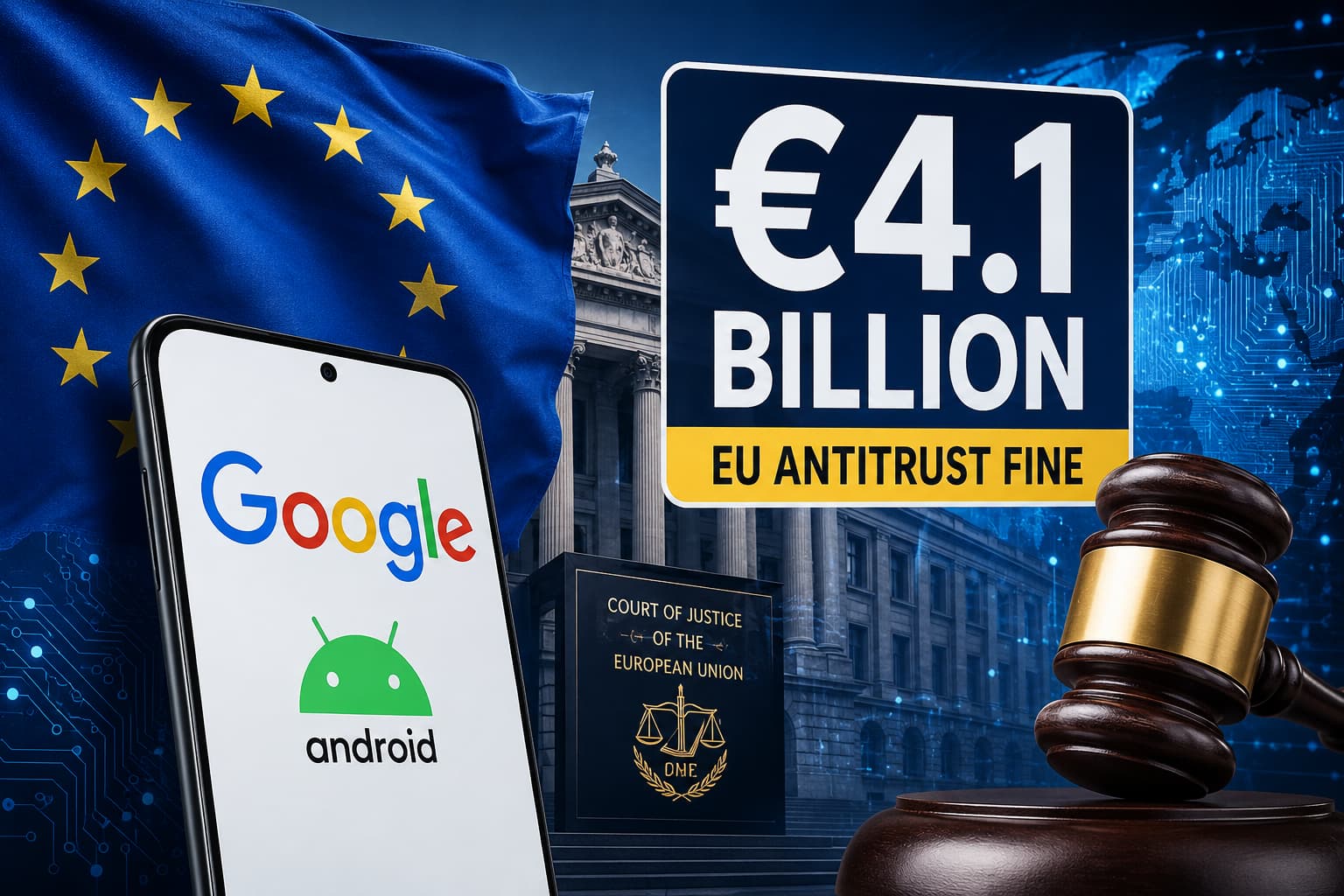
Google’s Biggest Android Antitrust Battle Ends
EU fines Google once again after the company lost its final appeal against the European Union’s €4.1 billion Android antitrust penalty. The ruling by the highest EU court is clear evidence that Google has been abusing its dominance in the Android ecosystem through competitive practices.
It is not just about the fine anymore; it also sets a precedent for how regulators can go against the market power held by the biggest technology firms in the world. This ruling will definitely set the tone for the future of Android and other mobile applications and their software.
Key Highlights
- Final appeal by Google over €4.1 billion antitrust fine for Android rejected by the EU.
- The dispute started following an investigation by the European Commission that began in 2015.
- It was established that Google had acted in such a way as to increase the dominance of Google Search on Android.
- This case demonstrates the increasing willingness of Europe to regulate tech giants.
- According to Google, it has changed its policies regarding Android licensing since 2018.
- Google Loses Final €4.1 Billion Appeal against EU fines.
The final appeal by Google has been rejected by the Court of Justice of the European Union, resulting in the imposition of a fine of €4.1 billion on the company for breaching competition laws of the European Union. This is a case that began eight years ago following the €4.34 billion fine imposed on Google by the European Commission in 2018.
Even after the reduction of the fine to €4.1 billion by a lower court in 2022, Google’s appeal was unsuccessful.
Why the EU Penalized Google
As per European officials, Google employed Android to increase the market power of its services rather than providing an even chance for its rivals to compete against it.
It emerged from the probe that Google made many phone manufacturers install Google Search, Google Chrome, and the Google Play Store as a precondition of their licensing agreement. It made it much more difficult for other search engines and web browsers to attract customers.
The European Commission held that the move was detrimental to consumer welfare and innovation.
How Android Practices Triggered the Antitrust Case
Android is installed on the majority of mobile phones around the world, making it one of the most significant mobile operating systems.
EU officials have found that Google leveraged its market position through actions such as:
- Requiring manufacturers to install Google Search and Chrome apps by default.
- Preventing manufacturers from selling mobile devices using rival variants of Android.
- Implementing contractual measures that helped maintain Google’s supremacy in search.
The European Commission felt that these actions provided Google with a competitive advantage.
What This Means for Android Users and Smartphone Makers
Most users of Android phones will not experience immediate changes in functionality following the decision.
Nevertheless, there could be more room for maneuver for manufacturers while creating new Android phones. There might be more space for implementing other search engines, web browsers, or application stores without having the same limitations set by the contract.
In addition, the decision might stimulate competition among the developers and thus provide consumers with more options when buying Android phones.
Impact on Big Tech Regulation
This decision comes as another significant step in Europe’s journey towards regulating dominant technology firms.
In recent years, the EU has implemented regulations to help it enforce tougher competition laws against digital platforms with dominant market positions. The Android decision is believed to bolster the regulators’ resolve as they implement regulations like the Digital Markets Act.
Industry experts opine that the decision could impact future investigations into similar cases with other technology firms.
The ruling also reflects a broader trend of increasing legal scrutiny facing major technology companies. Google is not alone, as firms including Meta and YouTube have also faced significant legal challenges over platform design and user safety. Read our coverage on Big Tech addiction lawsuits to learn how regulators and courts are examining other areas of the technology industry.
Google’s Response
After the ruling, Google argued that Android was an open platform that facilitated innovation and competition.
Google argued that Android continues to remain free and interoperable for both hardware manufacturers and developers. Additionally, Google noted that it had modified its license agreements in light of the 2018 ruling to satisfy the laws of the European Union.
In spite of the legal ruling against it, Google has promised that it would continue investing in Android technology.
What’s Next for Google in Europe?
However, despite the fact that this case has come to an end, Google’s regulation problems in Europe are far from being resolved.
The company still finds itself under scrutiny for new investigations of its search service, digital service, advertising policy, and apps market due to new European regulations, and the results of these investigations may determine Google’s future course of action in Europe.
To the rest of the tech companies, this decision shows that regulators are ready to apply large fines in case of competition law violation.
A Landmark Decision That Could Reshape Big Tech
The latest ruling in the EU fines case against Google stands out among the most important antitrust rulings in the history of international tech firms. However, while the size of the fine is huge, what makes it even more interesting is the fact that it sets a very important precedent.
Considering the fact that all major governments in the world continue studying the impact of dominant digital platforms, it may become a model in future antitrust regulations, which will go way beyond Europe.
Frequently Asked Questions
Why was Google fined €4.1 billion?
The European Union concluded that Google abused Android’s dominant market position by requiring smartphone manufacturers to pre-install Google Search and Chrome while restricting competing Android platforms.
Has Google paid the fine?
The legal appeals process has now concluded, confirming the €4.1 billion penalty originally imposed by EU regulators after being reduced from €4.34 billion.
Will Android users notice any changes?
Most users are unlikely to experience immediate changes. However, future Android devices may offer greater flexibility in choosing search engines, browsers, and other default services.
Why is this case important?
The decision strengthens the European Union’s efforts to regulate dominant technology companies and could influence future antitrust actions against major digital platforms worldwide.

COMMENTS