
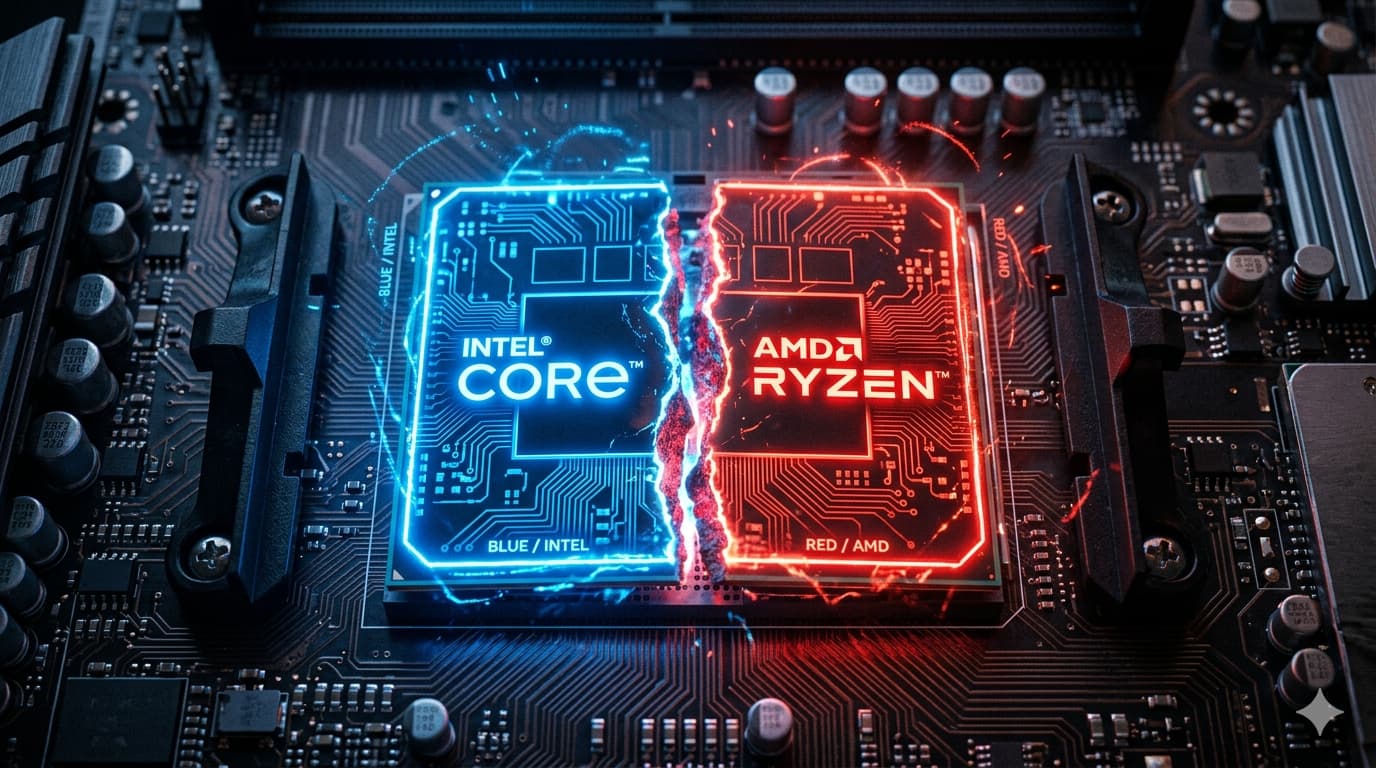
Intel vs AMD AI Chip Race Heats Up
If you’ve looked at a new laptop recently, you’ve probably seen terms like “AI-powered” everywhere. It sounds like marketing at first, but the Intel vs AMD AI race is actually changing how laptops work behind the scenes. And once you notice it, it starts to make a lot more sense why this competition suddenly matters.
If you’ve looked at a new laptop recently, you might’ve seen terms like “AI-powered” or “AI chip” and thought… what does that even mean?
It sounds like marketing at first. But it’s actually changing how laptops work behind the scenes.
And once you understand it, you start seeing why this Intel vs AMD AI race suddenly matters a lot more.
What Are AI Chips in Laptops?
If you bought a laptop a few years ago, you probably looked at RAM, storage, maybe the processor name… and that was it.
Now there’s a new term showing up everywhere in AI chips.
Sounds fancy, but the idea is pretty simple.
Companies like Intel and AMD are building processors that can handle AI tasks directly on your laptop. No internet needed for many of them.
That includes things like voice processing, image edits, or even background tasks you don’t notice at first.
And honestly, once you get used to it, it’s hard to go back.
Intel’s Approach: Core Ultra and AI PCs
Intel is pushing this idea quite hard. Their Core Ultra chips are built around AI from the ground up.
Not just raw speed, but smarter processing.
You’ll notice it in small ways. Better video calls. Faster responses from AI tools. Less lag when doing heavier tasks.
It’s not always flashy. Sometimes it’s subtle. But it adds up.
AMD’s Strategy: Ryzen AI Performance
AMD is taking a slightly different path. Still focused on AI, but not at the cost of overall performance.
Their Ryzen AI chips try to balance things out. You get AI features, sure, but also strong performance for gaming or editing.
So if you care about both power and smart features, AMD makes a strong case.
It really comes down to how you use your laptop.
Why On-Device AI Matters in the Intel vs AMD AI Race
Here’s where things get interesting.
Most AI used to rely on the cloud. You send data, wait for a response. Sometimes fast, sometimes not.
This shift isn’t limited to laptops either. Even smartphones are starting to handle AI tasks on-device, without relying on the internet, and that tells you where things are heading.
That means quicker results. Better privacy. And no dependency on internet speed.
You don’t think about it much at first. But once you notice the difference, it’s hard to ignore.
The Bigger Competition
This isn’t just Intel vs AMD anymore. It’s more like… who defines the next kind of laptop?
Both are trying to shape what “normal” computing looks like in a few years.
And that affects everything. Apps. Software design. Even though you interact with your device daily.
What It Means for Users
So what does all this mean for you?
Well, the way you choose a laptop is starting to change.
It’s no longer just:
“How fast is it?”
Now it’s also:
“How smart is it?”
Can it handle AI tasks smoothly? Does it make your work easier without extra effort?
Those questions matter more than before.
The Future of AI Laptops
Laptops are slowly turning into something more than just machines you use.
They’re becoming systems that assist you. Sometimes quietly. Sometimes in ways you didn’t expect, and of course, the hardware is just one part of the story. The real impact shows up in how AI tools are becoming part of everyday work and quietly changing how tasks get done.
And this Intel vs AMD race? It’s pushing that change faster.
Which, if you think about it, is actually a good thing.

COMMENTS