
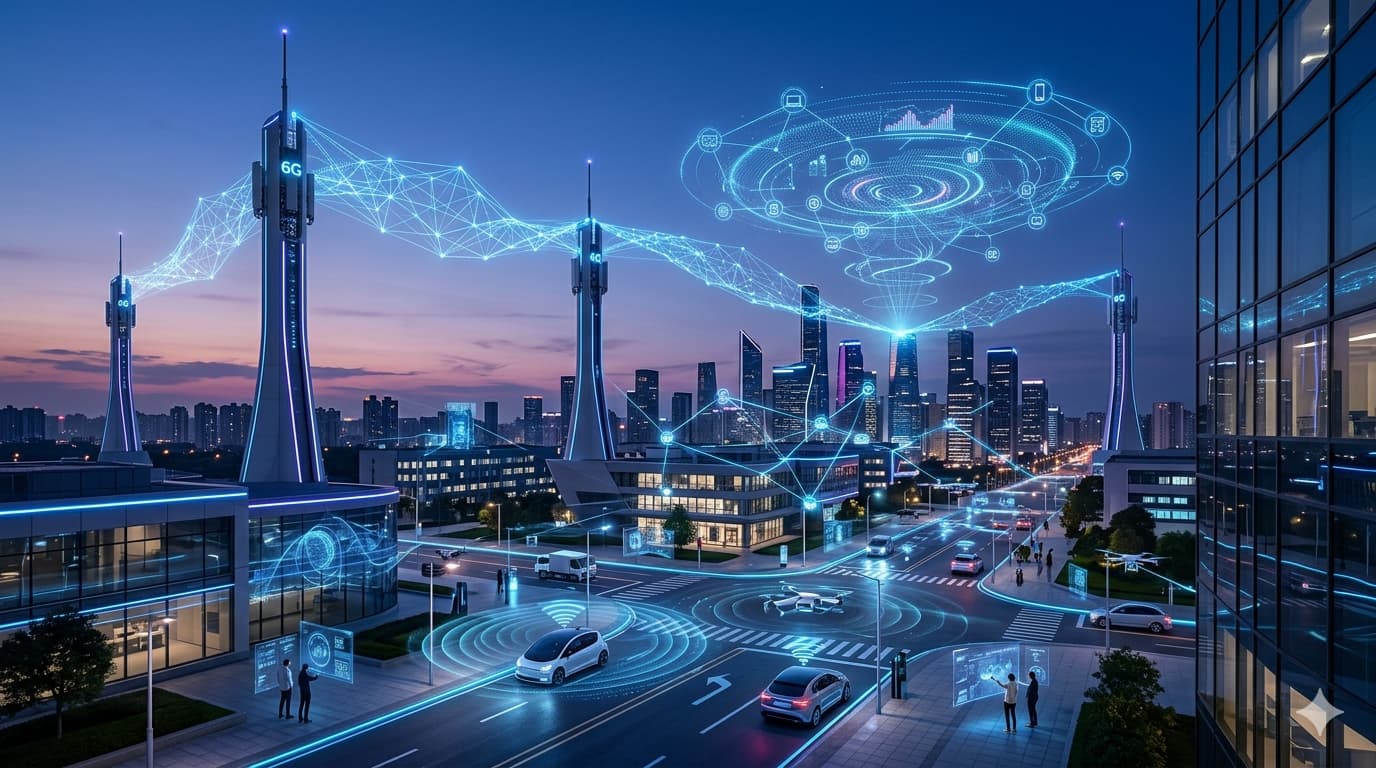
Samsung and LG Uplus 6G Plans Take Shape
Most people are still getting used to 5G. Yet behind the scenes, tech companies are already working on what comes next. Samsung and LG Uplus 6G Partnership Signals the Next Step in Wireless Technology.
Samsung and LG Uplus have announced a new partnership focused on a technology called Integrated Sensing and Communication, or ISAC. It may sound technical, but the idea is actually pretty interesting. Instead of networks simply moving data from one place to another, future networks could also understand what’s happening around them.
That vision is becoming a big part of the conversation around 6G.
Consumers will likely wait several years before they can use the technology. Even so, partnerships like this offer a glimpse of where wireless connectivity might be heading.
Samsung and LG Uplus Announce 6G Collaboration
Samsung and LG Uplus are joining forces to research and test ISAC technology.
The goal is simple. They want to build networks that can communicate and sense their environment at the same time.
Samsung will handle much of the technology development. LG Uplus will help test the technology on real network infrastructure. Together, they plan to run trials using existing 5G networks and explore how the technology performs in the 7 GHz spectrum band, which is being considered for future 6G services.
This isn’t the first time companies have started preparing for a new generation of wireless technology years before launch. That’s actually pretty normal in telecom, and by the time consumers hear about a new network standard, researchers have often been working on it for years.
What Is Integrated Sensing and Communication (ISAC)?
The name sounds complicated, but the concept is easier to understand than you might think.
Today’s wireless networks are mainly built to send and receive data. Your phone connects to a network, data moves around, and that’s pretty much the end of the story.
ISAC will add another layer, and the same signals used for communication can also help detect objects, movement, and changes in the surrounding environment. Think of it as giving the network a way to “see” what’s happening around it.
For example, wireless signals naturally bounce off buildings, vehicles, and people. By analyzing those reflections, a network can gather useful information about location, speed, and movement.
It almost sounds like science fiction at first. Yet researchers see it as one of the most promising features of future 6G networks.
How ISAC Could Change Future Networks
Imagine a network that doesn’t just connect devices but also understands what’s happening nearby.
That’s the big idea behind ISAC because current systems often depend on separate technologies such as cameras, sensors, radar systems, or tracking devices. In the future, some of those functions could be handled directly through wireless infrastructure.
That could make networks smarter and more responsive, and Artificial intelligence will likely play a major role here, too. AI systems could process huge amounts of sensing data and spot patterns much faster than humans can. Many experts believe that future 6G services will depend on powerful AI infrastructure to process data and support intelligent network operations.
Traffic congestion could be detected automatically. Crowd movement might be monitored in real time. Emergency services could receive useful information faster than they do today.
There’s still a lot of research ahead, but you can see why telecom companies are paying attention.
Potential Applications of ISAC Technology
Smart Cities
Smart cities are often mentioned whenever new network technologies appear. Sometimes it feels like a buzzword, but in this case, though, there are some practical possibilities.
Future networks could help monitor traffic flow, identify accidents, and manage busy public spaces. Local authorities might get a clearer picture of how people and vehicles move through a city during different times of the day.
That information could help improve transportation systems and reduce congestion.
Industrial Automation
Factories are becoming more connected every year.
Machines, robots, and automated systems already work together in many facilities. ISAC could help those environments become even more efficient.
A network that can track movement and monitor activity in real time may improve safety and productivity. Equipment problems might also be detected earlier before they cause costly downtime.
For manufacturers, that could be a valuable advantage.
Public Safety and Security
This is another area where ISAC could make a difference.
Future networks may help emergency responders locate people during rescue operations or provide better awareness during critical situations.
There is also growing interest in using sensing technology to detect unauthorized drones and monitor sensitive locations.
Of course, privacy questions will need to be addressed. New capabilities often bring new concerns, and this technology will be no exception.
Why This Matters for 6G Development
A lot of people hear “6G” and immediately wonder whether it’s just a faster version of 5G.
The answer is probably no.
Speed will still matter, but researchers are talking about something much broader. Many believe 6G networks will combine communication, sensing, and artificial intelligence into a single platform.
The future of wireless communication will likely include both terrestrial networks and satellite internet, creating new opportunities for global connectivity.
That’s one reason ISAC is getting so much attention.
Industry organizations have already identified sensing capabilities as an important part of the future 6G vision. Companies that develop these technologies early could help shape the standards used worldwide.
For Samsung, this partnership is another step in a long-term effort to stay at the forefront of wireless innovation.
Challenges Facing 6G Adoption
As exciting as the technology sounds, there are still plenty of hurdles ahead.
Building next-generation network infrastructure isn’t cheap. Telecom operators will need to invest heavily in new equipment and upgrades.
Spectrum allocation is another challenge. Regulators across different countries must decide which frequency bands will support future 6G services.
Privacy is likely to become an even bigger topic.
If networks can sense their surroundings, people will naturally want to know how that information is collected, stored, and used. Clear rules and safeguards will be important.
Then there’s the timeline.
Despite the growing interest, commercial 6G networks are still several years away. Most experts expect development and testing to continue throughout the rest of this decade.
What Comes Next for Samsung and LG Uplus?
For now, the focus is on research and testing.
Samsung and LG Uplus will continue evaluating ISAC technology in real-world environments. The results could help shape future standards and influence how 6G networks are eventually deployed.
Competition in advanced connectivity is growing rapidly, and the satellite network race shows just how much companies are willing to invest in future communication technologies.
It’s still early days. Nobody is promising a 6G smartphone next year.
Even so, the work being done today could play a major role in the networks people use in the future.
That’s usually how big technological shifts begin. Small research projects eventually become everyday tools that millions of people rely on without giving them much thought.
What This Means for the Future of 6G
Samsung and LG Uplus may be looking years ahead, but their latest partnership highlights an important trend in the telecom industry.
Future networks are expected to do much more than connect devices. They could also understand their surroundings, support AI-driven services, and provide entirely new ways to interact with the physical world.
Whether ISAC becomes one of the defining technologies of 6G remains to be seen. What is clear, though, is that companies are already investing heavily in that future.
And while 6G may still feel distant today, the foundations are quietly being built right now.

COMMENTS