
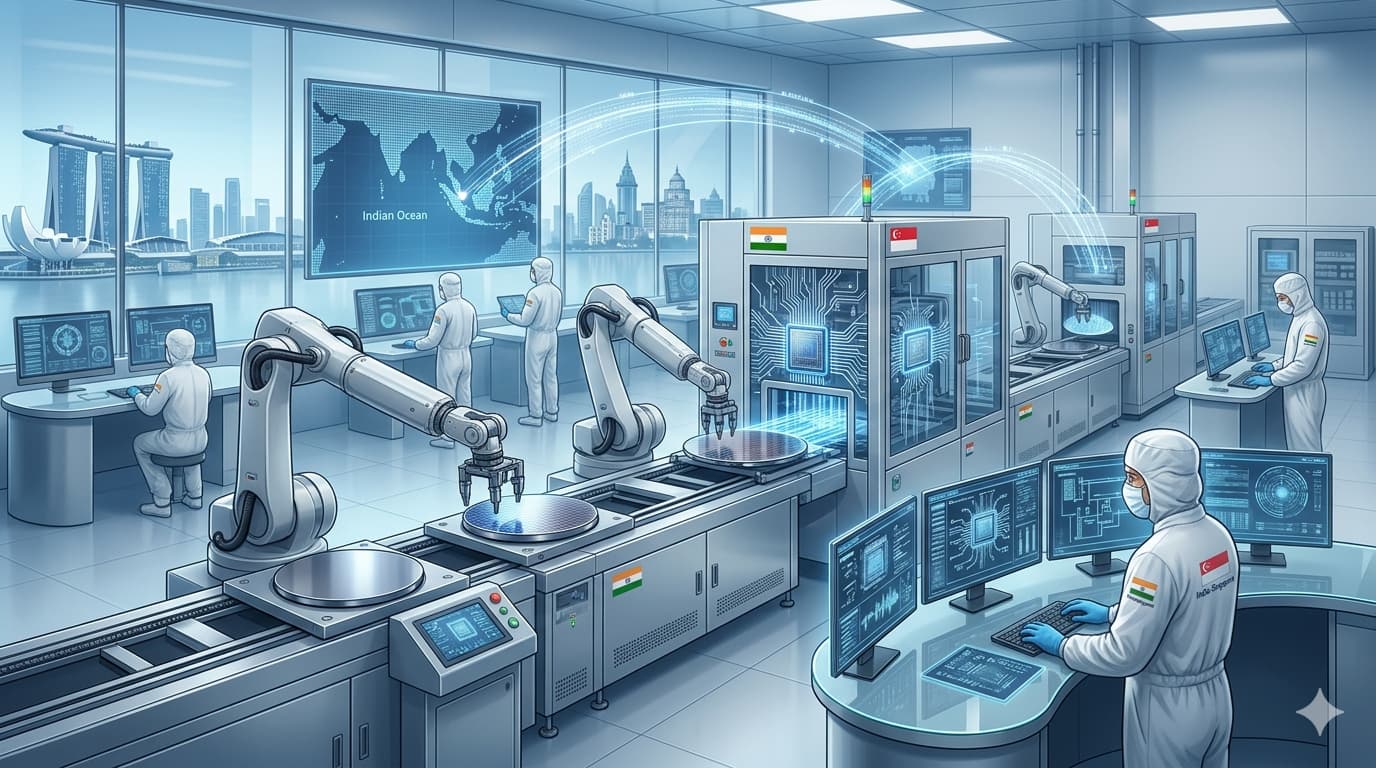
Semiconductor Industry in India Gets a Fresh Push
The semiconductor industry in India has been getting a lot of attention lately, and for good reason. This is not just another policy story that sounds big for a few days and then fades away. India’s growing tie-up with Singapore feels more practical than that. It looks like a step that could actually help the country move closer to its chip goals.
If you think about it, this shift was always going to matter. Chips now sit inside almost everything you use. Your phone depends on them. Cars do too. AI tools need even more of them than most people realize. So when India tries to build stronger supply chains, it is really preparing for the future, not just reacting to headlines.
India is trying to build this ecosystem at a time when AI chip shortage concerns are becoming harder to ignore, especially as AI infrastructure keeps putting more pressure on global supply chains.
Why the India-Singapore semiconductor partnership matters
The India-Singapore semiconductor partnership stands out because both sides bring something useful. Singapore has experience in semiconductor manufacturing, logistics, and global trade. India brings scale, demand, and government support. That combination could make a real difference if both countries stay focused on execution.
There is also a practical side to this that often gets missed. Semiconductor growth is not only about building factories. It is also about moving materials smoothly, attracting investment, and connecting with trusted partners. Singapore is strong in all of that, which gives India an edge it may not have built as quickly on its own.
What this means for chip manufacturing in India
This could be an important moment for chip manufacturing in India. The country has already been trying to reduce its dependence on imported chips, and partnerships like this can help speed that up. It may also make India a more attractive place for global companies that want stable, long-term expansion.
This will not change everything overnight. Semiconductor ecosystems take years to build. Still, this is the kind of move that creates momentum. Once investment, policy, and infrastructure start lining up, progress becomes much more realistic.
A bigger shift may be starting
The semiconductor industry in India could also benefit from what happens next. If this partnership works well, it may encourage more countries like Japan, Taiwan, and the United States to deepen their involvement, too. The bigger picture is not only about factories and policy support, because India’s progress also depends on talent, software, and the kind of momentum reflected in India’s growing developer base. That would give India more room to grow in a sector that has become strategically important.
And that is really the bigger picture here. Chip manufacturing in India is no longer just an idea people talk about in reports and speeches. It is slowly turning into something more concrete. If the current pace holds, India could start becoming a serious player in the global chip space over the next few years.

COMMENTS