
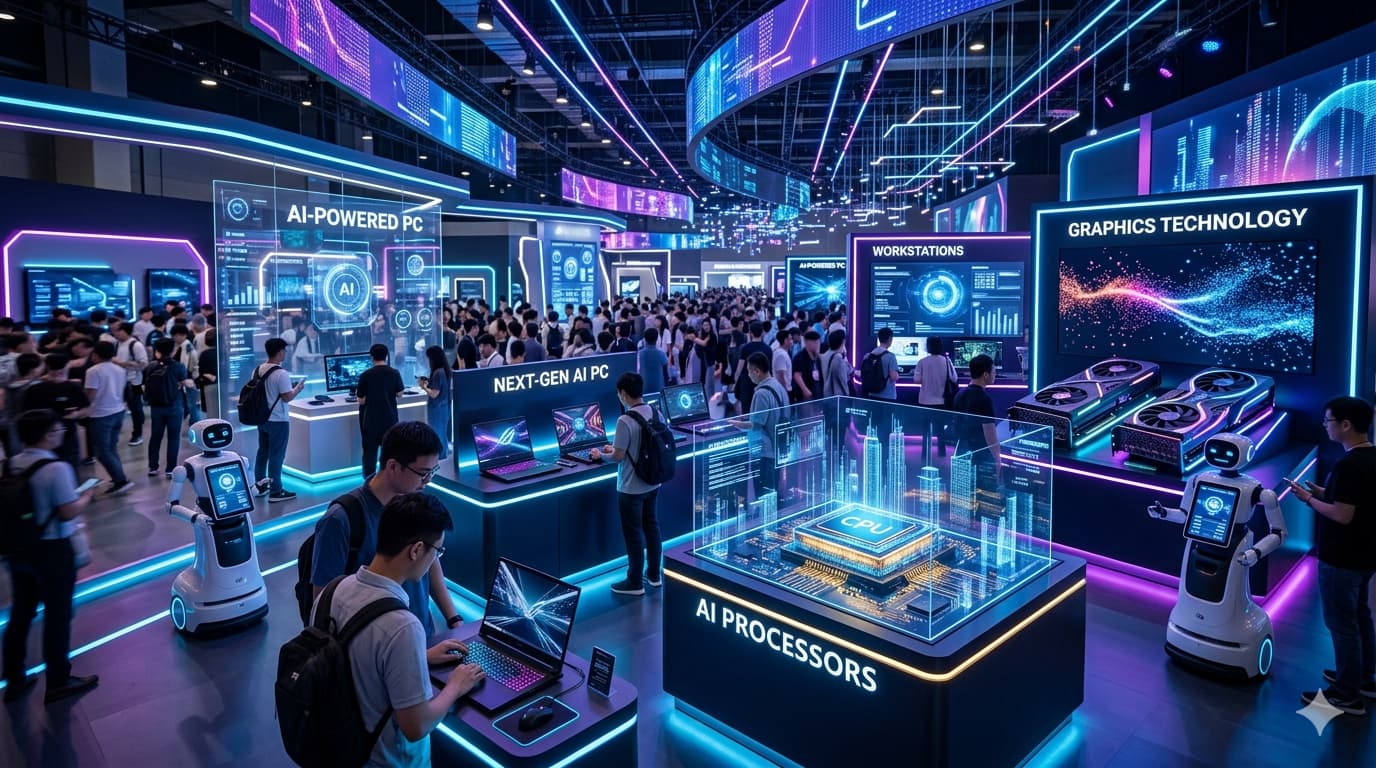
Computex 2026 Showcases the Next Era of AI Computing
Computex 2026 felt different. Not in a flashy, over-the-top way, but in a quiet shift that’s hard to ignore. AI wasn’t just something happening in big data centers anymore. It felt closer. Almost personal.
Instead of companies talking about cloud power all the time, they were showing machines you could actually keep on your desk. Systems that can run serious AI models without depending on the internet every second. That’s a big deal if you think about it.
1. NVIDIA Introduced the RTX Spark Platform
NVIDIA pretty much stole the spotlight. The new RTX Spark platform is their big step into AI PCs.
It mixes Arm CPU cores with Blackwell GPU tech and packs up to 128GB of unified memory. That’s not a small number. The idea is simple: run complex AI tasks locally without needing a server somewhere else.
They also talked about “agentic AI.” Sounds fancy, but think of it like AI that can actually handle tasks on its own instead of waiting for instructions every time. Feels like we’re getting closer to having a proper digital assistant that lives on your own machine.
2. AI PCs Became the Main Attraction
Almost every booth had something labeled “AI PC.” ASUS, HP, and others were all in.
You could tell this isn’t just marketing anymore. These systems are being designed from the ground up to handle AI workloads. Not just light stuff like filters or voice commands, but heavier tasks too.
If you’ve ever tried running a local model and felt your system struggle, you’ll get why this matters.
3. Local AI Processing Was Everywhere
This was probably the biggest shift. Companies kept pushing the same idea: run AI locally.
There are obvious benefits. Your data stays with you. Things respond faster. And you’re not paying for cloud usage all the time.
Gigabyte even showed systems built specifically for this. It’s interesting because a year ago, this still felt niche. Now it feels like the direction everything is heading.
4. ASUS Unveiled a Powerful AI Mini PC
This one caught my attention. A tiny ASUS mini PC powered by Snapdragon X2 Elite.
It comes with an 80 TOPS NPU, which basically means it’s built for AI tasks. The surprising part? It’s small enough to fit almost anywhere.
You don’t usually expect serious performance from something that compact. But that’s clearly changing.
5. Gaming Hardware Continued to Push Boundaries
Gaming didn’t take a backseat.
There were new OLED monitors with very high refresh rates. Cooling systems looked more advanced than ever. And the designs… some of them felt more like showpieces than just hardware.
ASUS ROG also celebrated its 20th anniversary, which added a bit of nostalgia to the mix. Special editions, flashy setups, all of it.
Even with AI taking center stage, gaming still has its own strong lane.
6. Handheld Gaming PCs Got More Powerful
Handheld gaming PCs are getting serious now.
MSI showed off the Claw 8 EX AI+. It comes with Intel’s Arc graphics and better ergonomics. You can tell companies are paying attention to comfort now, not just specs.
If you’ve been following this space, you know competition is heating up. It’s not just Steam Deck anymore.
7. Intel Showcased New AI and Data Center Hardware
Intel focused more on the bigger picture.
They introduced Xeon 6+ processors and gave a preview of their Crescent Island AI GPU. This is more for enterprise and data centers, but it still connects to the whole AI ecosystem story.
They kept talking about openness. Hardware, software, everything working together. It sounds good on paper, but we’ll see how it plays out.
8. Robotics and Edge AI Expanded Beyond PCs
AI wasn’t limited to computers this time.
There were robots, mobility solutions, and industrial systems everywhere. The theme “AI Together” made more sense once you saw all this in action.
It’s a reminder that AI isn’t just about chatbots or image generation. It’s slowly moving into the physical world too.
Key Takeaway
If there’s one thing that stood out in Computex 2026, it’s this: AI PCs are no longer just a concept.
They’re real. And they’re getting powerful fast.
Instead of sending everything to the cloud, your own device can handle more than before. That changes how you think about privacy, performance, and even cost.
Feels like we’re at the start of something big. Maybe not dramatic right now, but give it a year or two. This shift is going to show up in everyday use.

COMMENTS