
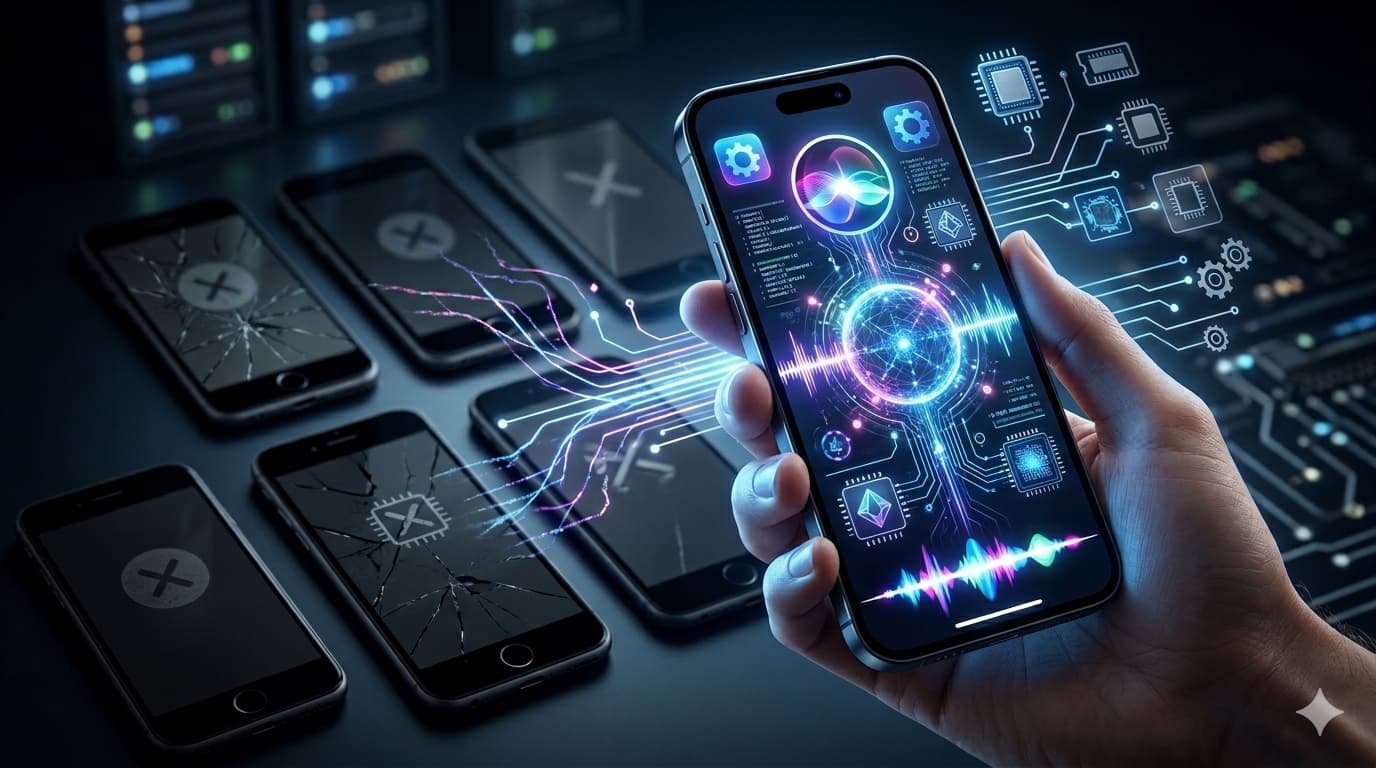
Apple’s AI Ambitions Face a Major Hardware Roadblock
The AI-powered next generation of Apple‘s virtual assistant, Siri, will mark an epoch-making improvement in the company’s history, but unfortunately, not all iPhone users will benefit from it. With the expansion of Apple Intelligence, the problem is becoming more acute, with experts noting that many older iPhones lack sufficient hardware for efficient AI operations.
The example illustrates the issue faced by all companies manufacturing smartphones, which are becoming increasingly dependent on hardware.
Why Apple’s New Siri Requires More Powerful Hardware
The new AI-powered Siri from Apple is developed to have a much greater capability compared to its predecessors. Using Apple Intelligence technology, it is able to understand the context, hold more natural conversations, act within multiple apps, and assist in a personalized way based on the user’s behavior.
These features would not be possible without intensive processing power performed by artificial intelligence directly on the device.
To make them available, the smartphone needs:
- More RAM
- Faster processors
- Advanced Neural Engine capabilities
- Higher memory bandwidth
- Improved AI acceleration hardware
Many older iPhone models were not designed with these requirements in mind, making it difficult for them to run the newest AI features efficiently.
Which iPhones Could Be Affected?
While the company continues upgrading iPhones with software updates, some of them fail to access the complete Apple Intelligence experience. iPhone 15 Pro models, and iPhone 16 models or later
Current AI capabilities are mainly restricted to the newest iPhone models like iPhone 15 Pro models, and iPhone 16 models or later that come with new-generation chipsets and expanded memory. Although some of the older iPhones still benefit from regular Siri service, they may be unable to exploit the full potential of AI.
It clearly separates those models of iPhones that have sufficient capabilities for AI use from those that lack such features.
How Apple’s AI Strategy Could Drive iPhone Upgrades
The constraints in relation to the hardware required to support AI on Apple devices will likely cause many customers to upgrade to better hardware sooner than expected.
Consumers have traditionally tended to keep their old mobile phones for as long as possible, usually between four and six years before upgrading to something better. However, it might soon become necessary for consumers to buy new devices to enjoy the benefits of AI.
It is estimated by industry experts that AI-powered Siri in Apple’s products could be a driving factor towards an upgrade trend among its customers.
Should AI become a core aspect of smartphones, then it may very well become an important consideration when choosing a device.
What New AI Features Does Siri Offer?
The improved Siri has a number of features that have been added in order to make it easier for the user to have better conversations using this feature.
Some important features include:
- Conversation context
- Understanding of follow-up questions
- Personalization depending on what the person does
- Improvements in app support
- Multi-app functionality
- Improved information search capabilities
These features will help Apple’s version of Siri become smarter and better than ever before.
Apple Is Not Alone: The Industry-Wide AI Hardware Problem
This is not an issue that Apple alone faces.
Within the tech industry, smartphone and PC makers alike are realizing that the use of AI technologies requires better hardware. This is also the reason tech products are getting expensive across the industry.
Tech companies like Samsung and Google are already developing applications that utilize AI, but function best when used on the latest hardware available. Likewise, AI-equipped laptops need dedicated hardware to be able to use AI technologies.
Hardware limitations will likely become an industry-wide problem as AI continues to become more widespread within consumer tech products.
What It Means for Current iPhone Users
For people already using iPhones, it does not imply that there will be no more functions left in them or Siri will become dysfunctional.
For customers using older versions, they might not have the complete bundle of Apple Intelligence features.
Those who are thinking about upgrading can consider the following:
- Are AI features relevant to their daily usage?
- How long would they use their current device for?
- What new features of Apple Intelligence do they want?
For those who are content with their basic smartphone capabilities, upgrading their current device might not seem important. For those who seek advanced AI capabilities, new hardware could prove beneficial.
The Future of Mobile AI Depends on New Hardware
Nevertheless, Siri on iPhones shows how the use of artificial intelligence has evolved. It also serves to reflect the increasing demands being put on smartphone hardware as AI evolves to greater sophistication.
However, one thing that is becoming harder for Apple is finding a way to provide the necessary innovative power without sacrificing affordability and making sure that consumers will be able to enjoy all the new opportunities provided by AI technology.
It seems that when the age of AI comes to mobile devices, hardware may start to be just as crucial as camera resolution or battery life.

COMMENTS