
The Rise of AI-Powered Cyber Threats
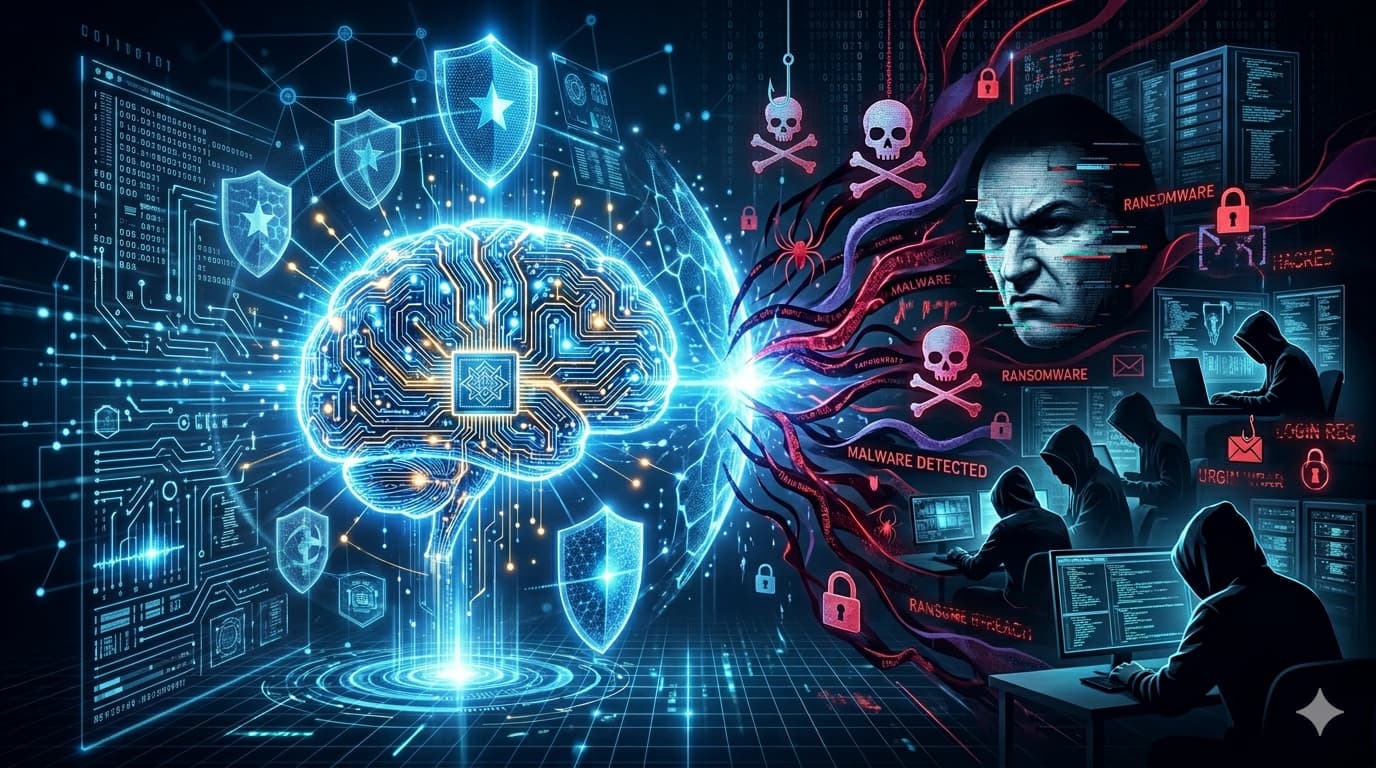
AI-powered cyber threats are quickly revolutionizing the entire cybersecurity industry. With advancements in AI and the increasing availability of such technologies, hackers are using AI for launching complex phishing attacks, deploying deepfakes, crafting malware that adapts to its environment, and performing automated cyberattacks like never before. On one hand, organizations and cybersecurity professionals are utilizing the power of AI for protecting themselves from cyber threats, and hackers too have jumped onto the bandwagon of AI and are using it to identify and exploit weaknesses.
It seems that as more and more entities join the arms race and deploy AI technology, cybersecurity becomes an AI battlefield, and only the best-equipped side wins.
This article aims to explore how AI is shaping the future of cybersecurity, its challenges, and how one can adapt to face future challenges in the field.
Why AI Is Reshaping Cybersecurity
In recent years, cybersecurity threats have grown more sophisticated. Millions of cyberattacks occur in an organization in any single year, and such cyberattacks include phishing, ransomware, data breaches, and supply chain compromise.
It becomes increasingly difficult for traditional security products to cope with all these threats. And this is where AI enters the game.
AI-based solutions like Mythos 5, vectra.ai have the ability to process large volumes of data and spot potential threats within a short amount of time. In addition, the use of AI allows automating numerous cybersecurity tasks and thus speeds up the whole response process.
But cybercriminals also resort to using AI, thereby entering the new age of artificial intelligence cyber warfare.
How Attackers Are Using AI for Cybercrime
AI-Generated Phishing Attacks
Phishing still represents one of the most prevalent types of cybercrime, although now AI has elevated these crimes to a new level of sophistication.
With contemporary tools of artificial intelligence, phishing criminals create email communications that are virtually indistinguishable from those sent by their coworkers, superiors, or familiar companies. Some offenders resort to AI-based voice impersonation technology for carrying out phone calls and online conferences.
Thus, the line between genuine correspondence and fraudulent content becomes blurred.
Automated Vulnerability Discovery
AI technology can quickly analyze software, websites, and networks in order to uncover any possible flaws or areas that may be taken advantage of.
Before, uncovering such vulnerabilities was quite difficult and took time; now, however, with the use of AI technology, hackers are able to automate much of the process.
AI-Powered Malware
Cybercriminals are also experimenting with AI-enhanced malware capable of adapting its behavior to avoid detection.
These advanced threats can analyze security environments, modify attack patterns, and evade traditional antivirus solutions, making them more dangerous than conventional malware.
How Security Teams Are Fighting Back With AI
While attackers are leveraging AI to enhance cybercrime, defenders are using the same technology to strengthen security.
AI-Powered Threat Detection
One of the major benefits of AI technology in cybersecurity is its capacity to track large volumes of data on an ongoing basis.
The use of AI technology allows for detecting unusual activity and alerting about possible threats that might be harmful before any major damage takes place.
Automated Incident Response
In case of a security breach, time becomes of the essence.
AI will allow the infected system to be automatically quarantined, blocked from traffic, and taken under control mode without any need for human intervention.
Vulnerability Management and Patch Automation
In addition, artificial intelligence helps in finding software flaws that can be later exploited by malicious users.
The ability to analyze code, predict possible vulnerabilities, and rank them according to the risk allows concentrating on the most critical issues.
Project Glasswing and the Rise of Defensive AI
One of the key advances that has been made in the realm of AI cybersecurity is the development of sophisticated defensive AI projects.
Projects such as Project Glasswing seek to utilize innovative AI-based solutions for the detection of vulnerabilities within critical software infrastructures. The idea behind the creation of such projects is that they are meant to detect security issues more quickly than any traditional means and give organizations recommendations for improvement.
It is clear how relevant these projects are for the governments of different countries and technology providers, which explains their increasing popularity.
In the face of constantly developing cyber threats, these types of projects will be crucial to national security.
Major Cybersecurity Trends in 2026
AI vs AI Security Warfare
There is an increasing trend of seeing AI-enabled attacks countered by AI-enabled defense mechanisms.
Companies have realized that to match the capabilities of attackers that utilize machine learning and powerful AI algorithms, they must invest in automation and similar measures.
Increasing Government Regulations
Governments worldwide have taken steps to regulate areas related to AI safety, cybersecurity, and the protection of critical infrastructures.
With each improvement made in the field of AI, there are new challenges being met in terms of ensuring security while allowing innovations.
Safeguarding Critical Infrastructures
Power generation systems, hospitals, transport systems, and telecom companies are becoming high-profile targets of cyberattacks.
AI-enabled security solutions are likely to be used to protect these infrastructures against any harm.
Adoption of AI in Enterprises
AI-based solutions are becoming integral components of enterprise SOCs (Security Operations Centers).
Risks and Challenges of AI in Cybersecurity
Even though AI has its strengths, it comes with a few drawbacks as well.
False Positives and False Negatives
An AI solution may sometimes make mistakes when classifying legitimate actions as malicious activities or vice versa, which can lead to problems for the operation.
Adversarial Attacks
Hackers are working on methods to trick AI systems and take advantage of machine learning technology.
Privacy Issues
The deployment of AI solutions often includes analyzing vast amounts of data provided by users, which raises some questions related to security and privacy.
Ethical and Regulatory Considerations
It is vital to apply AI solutions legally and ethically.
AI Race
Maybe the most significant risk of all is the development of technology and counterattacks from both sides.
What Businesses Should Do to Prepare
Incorporate AI Security Solutions
Companies must assess new security solutions that leverage AI to detect threats, monitor systems, and respond to incidents.
Train Employees on Cybersecurity Best Practices
People remain one of the most significant factors behind security risks. Training will make them better at identifying potential phishing attacks.
Focus on Effective Patch Management
The need to identify vulnerabilities and patch systems faster is now more than ever critical due to faster attack processes powered by AI.
Formulate an AI Governance Framework
Firms must have comprehensive governance frameworks to manage their AI technologies.
The Future of Cybersecurity in an AI-Powered World
Cybersecurity of the future will involve artificial intelligence technology to prevent AI-powered cyber threats.
With the continued development of AI technology, businesses will begin to implement AI-driven cyber defenses that can detect, mitigate, and even counter threats without requiring much input from humans.
However, cybercriminals have not been idle, as they continue to look for new opportunities to exploit AI technology.
To succeed in this new environment, organizations need to be flexible and able to respond to the threats effectively.
Frequently Asked Questions
Can AI prevent cyberattacks?
AI can significantly improve threat detection and response capabilities, helping organizations prevent many attacks before they cause damage. However, it should be viewed as a complement to human expertise rather than a complete replacement.
How are hackers using AI?
Hackers use AI for phishing campaigns, vulnerability discovery, malware development, social engineering, and automating cyberattacks.
What is AI-powered cybersecurity?
AI-powered cybersecurity refers to the use of artificial intelligence and machine learning technologies to detect, analyze, and respond to cyber threats.
Is AI a cybersecurity threat?
AI can be both a threat and a solution. While attackers can misuse AI to conduct more advanced cyberattacks, defenders can leverage the same technology to strengthen security.
Which industries are most vulnerable to AI-driven attacks?
Healthcare, finance, telecommunications, government agencies, energy providers, and critical infrastructure organizations are among the most targeted sectors.

COMMENTS