
, The AI Chip Battle Just Got Bigger
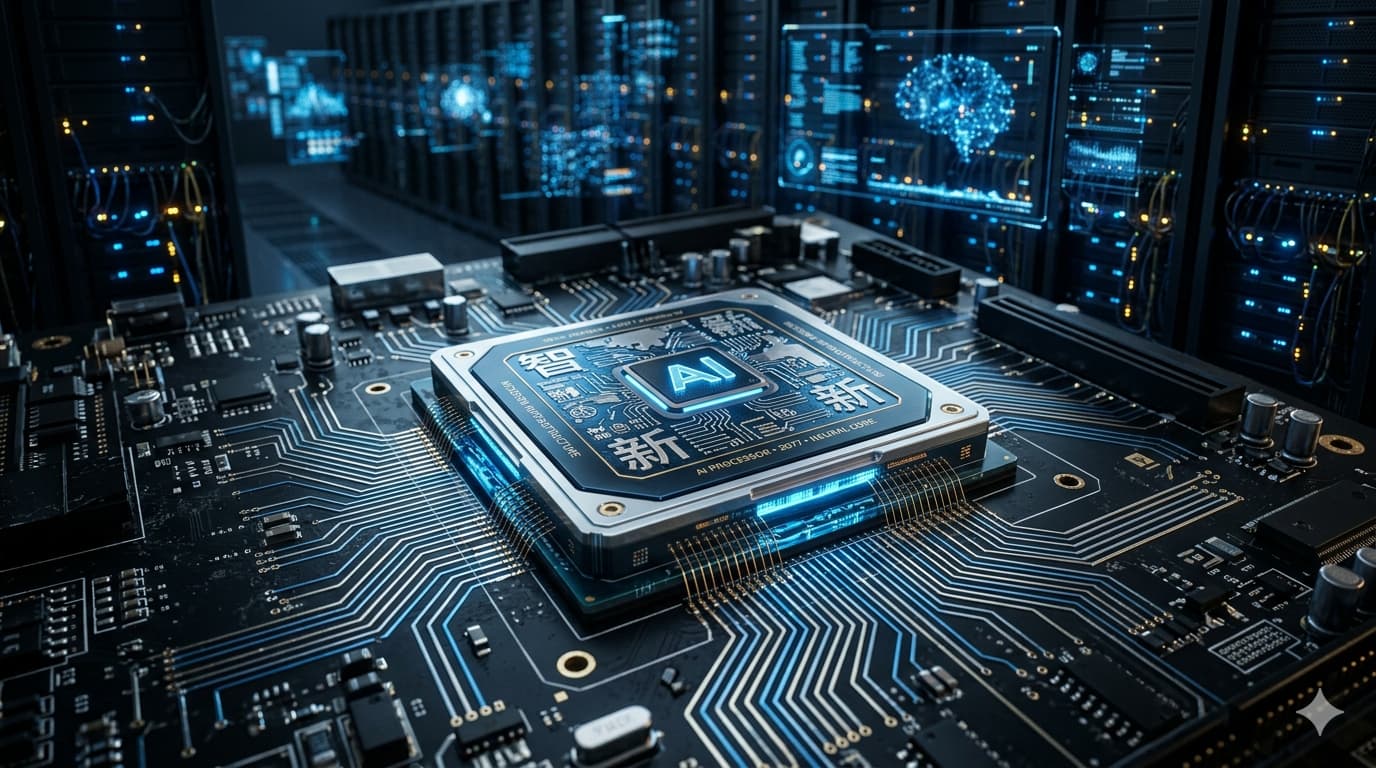
Alibaba has entered the AI chip race in a much bigger way with its new Alibaba AI chip called the Zhenwu M890, and honestly, this launch says a lot about where the tech industry is heading right now.
Every major tech company seems obsessed with AI infrastructure these days. Chips, cloud servers, AI models, everybody wants a bigger piece of it. Alibaba clearly doesn’t want to stay behind.
What makes this launch interesting is the timing. NVIDIA still dominates the AI hardware market, but access to those advanced chips has become harder for Chinese companies because of US export restrictions. So instead of waiting around, companies like Alibaba are trying to build their own alternatives.
And if you’ve been following the AI industry lately, you’ve probably noticed this trend already. Big tech firms are spending billions because AI demand keeps exploding.
Alibaba’s New AI Chip Explained
The new chip is called the Zhenwu M890. It was developed by Alibaba’s chip division, T-Head.
Alibaba says the chip is designed for AI workloads like training large AI models and running AI systems in real time. In simple terms, it’s meant to handle the heavy lifting behind modern AI tools.
The company is also focusing a lot on AI agents. That’s one of the biggest buzzwords in tech right now. These systems can perform tasks on their own instead of just answering prompts.
To make that possible, AI chips need more power, more memory, and faster communication between processors. That’s where the M890 comes in.
Alibaba claims this new chip performs much better than its older hardware. Of course, companies always say that during product launches. Still, the specs do look serious.
Key Features and Specifications
Here are some of the main things Alibaba highlighted during the announcement of its new AI chip:
- 144GB high-bandwidth memory
- Up to 800GB/s inter-chip bandwidth
- Support for AI training and inference
- Built for large AI workloads
- Better performance efficiency than earlier Alibaba chips
- Designed for AI agents and long-context reasoning
Alibaba also introduced a new AI server system called Panjiu AL128. It combines 128 AI accelerators into one rack setup.
That number alone tells you how aggressive these companies are becoming with AI infrastructure.
A few years ago, most people barely cared about data-center hardware. Now it’s becoming one of the most important battles in tech.
Why China Needs Domestic AI Chips
This is probably the bigger story behind the launch.
Chinese tech companies have been dealing with growing restrictions on advanced AI hardware. Especially chips from NVIDIA.
That created a huge problem. AI development depends heavily on powerful chips. Without them, it becomes harder to compete globally.
So companies in China are now pushing hard to build their own ecosystem. Alibaba is one of several major players trying to reduce dependence on foreign hardware.
You can almost think of it like a tech independence movement.
And honestly, it makes sense from their perspective. If access to critical hardware can disappear at any moment, building your own alternatives becomes necessary.
Competition With Nvidia and Other Tech Giants
Right now, Nvidia is still the company everyone is chasing.
Its AI GPUs are used almost everywhere. From OpenAI to cloud providers, Nvidia hardware powers a massive part of the AI boom.
But the competition is growing fast.
Huawei is developing its own AI accelerators. Baidu is investing heavily, too. Even companies like Google and Amazon are building custom AI chips for their cloud platforms.
Nobody wants to rely completely on another company anymore. That’s the pattern you keep seeing.
The interesting part is how quickly this race is moving. Six months in AI feels like three years in normal tech.
If you want to understand why AI infrastructure has become such a massive business, this piece on AI infrastructure growth explains it really well.
There’s also growing concern about an upcoming AI chip shortage as demand continues to rise.
Alibaba’s Long-Term AI Ambitions
The M890 isn’t just a one-off launch. Alibaba seems to be building a much bigger AI strategy around it.
The company is expanding Alibaba Cloud, improving its Qwen AI models, and investing more in AI infrastructure overall.
It also revealed future chip plans, including processors called the V900 and J900.
That’s important because it shows Alibaba is thinking long term. This isn’t some experimental side project anymore.
A lot of tech companies now want full control over their AI stack. Chips, cloud systems, software, models, everything connected.
And honestly, that’s where the industry seems to be heading.
You’re also seeing similar moves from other companies investing huge amounts into AI. This article on Big Tech AI spending breaks down just how intense the spending has become.
Meanwhile, even Google AI chips are becoming part of the competition against Nvidia.
Industry Impact and Future Outlook
The AI hardware market is changing really fast.
Not long ago, most people only talked about AI chatbots and image generators. Now the focus is shifting toward the infrastructure behind those tools.
Because without chips, none of this works.
That’s why companies are racing to build faster processors and larger AI data centers. Whoever controls the hardware could end up controlling a huge part of the AI economy later.
Will Alibaba catch Nvidia anytime soon? Probably not.
But that may not even be the goal right now. The bigger objective could simply be reducing dependence on outside suppliers and building stronger domestic AI capabilities.
And honestly, we’re probably still early in this whole AI infrastructure race.
Alibaba’s AI Hardware Push Is Just Beginning
Alibaba’s new Zhenwu M890 chip is another sign that the global AI race is getting more serious.
The company isn’t just building AI models anymore. It wants to compete across the entire AI ecosystem, including chips and cloud infrastructure.
That matters because AI demand keeps growing every month. More companies need computing power. More data centers are being built, and more money is flowing into AI hardware.
For now, Nvidia remains the leader. That hasn’t changed.
Still, launches like this show that the competition is becoming much more intense than it was even a year ago.

COMMENTS