
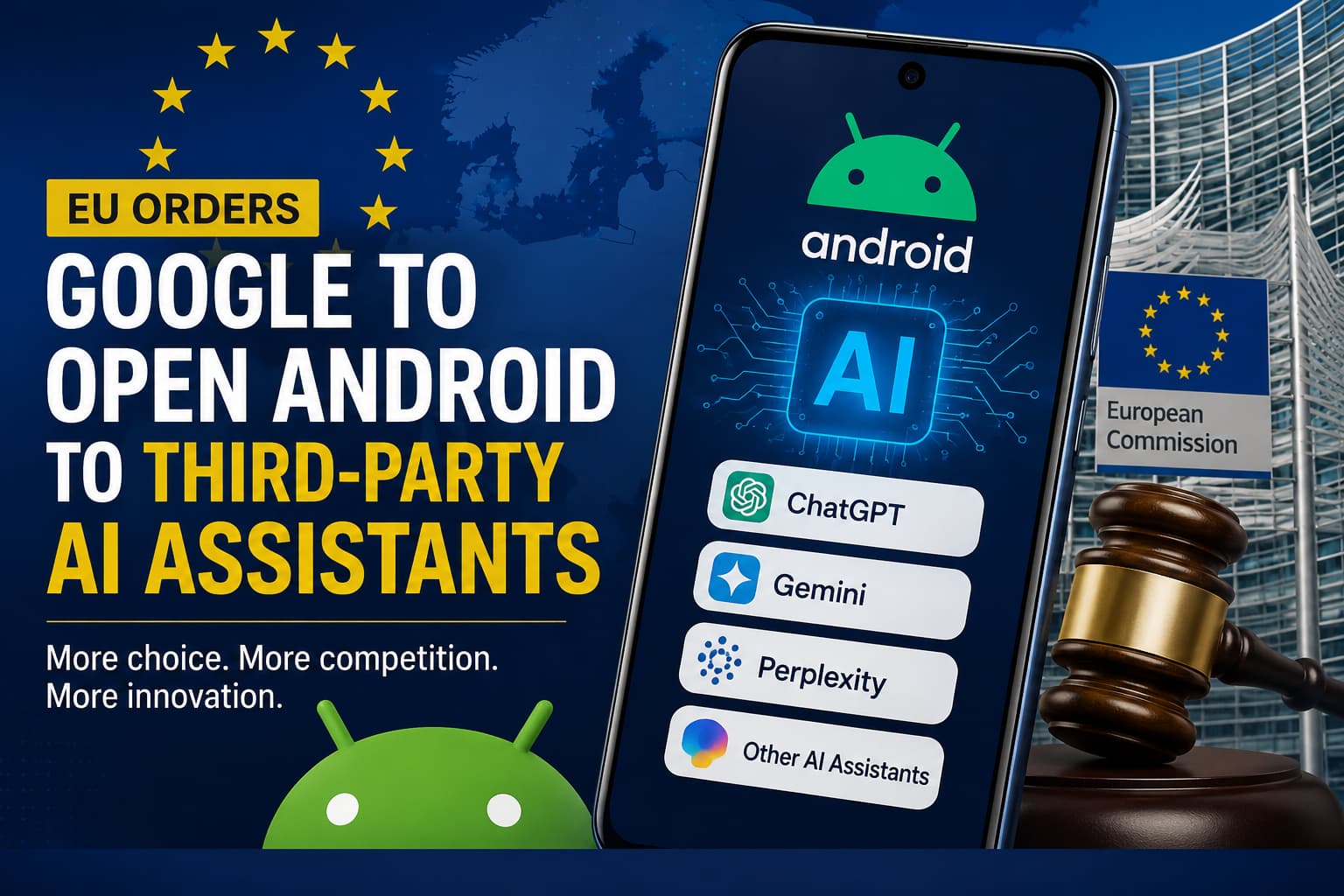
Android AI Assistants Face a Major Change
The Android-based AI assistants will now be able to compete much more effectively in Europe in the near future. In response to a recent ruling by the European Commission under the Digital Markets Act (DMA), Google must open its Android system to competing AI assistants.
This move is expected to provide people with more options for choosing their favorite AI assistant instead of depending mainly on Google’s Gemini. If it goes as expected, services like ChatGPT, Perplexity, and various other AI assistants will benefit from increased Android-based AI ecosystems on smartphones.
What Has the EU Ordered Google to Do?
The European Commission has imposed binding interoperability conditions on Google, compelling it to enhance Android’s accessibility to competing AI applications.
In the ruling, Google is required to do the following:
- Enable other AI assistants to use critical Android system features.
- Give developers interfaces similar to those used by its own Gemini assistant.
- Ease up on restrictions limiting competing AI assistants’ ability to integrate with Android smartphones.
- Release certain data from its Google Search tool to competitors in a secure manner.
The EU is convinced that the conditions will lead to increased competitiveness and innovation in the AI sector.
Why Is the EU Making This Change?
This ruling is a move by the European Union to implement the Digital Markets Act (DMA), which aims to prevent big tech corporations from abusing their market power and stifling competition.
Google has been identified as a “gatekeeper” through the Digital Markets Act (DMA) due to Android being installed on billions of phones across the world. According to the regulations, the gatekeepers should ensure that competing firms get equal access to the user base.
It is claimed that AI assistants are becoming integral parts of phones’ operations. By limiting the integration of competing AI programs to only Google’s own, Gemini, competing AI programs could have difficulty innovating or competing.
By forcing the incorporation of different AI assistants in the Android ecosystem, the EU will be able to:
- Ensure consumer choice.
- Promote AI innovation.
- Avoid giving any firm a competitive edge.
- Create a healthy digital market environment.
How Will This Affect Android Users?
For Android users, the changes could eventually provide much greater flexibility.
Potential benefits include:
More AI Assistant Choices
Users may be able to choose from several AI assistants instead of relying primarily on Gemini.
Better System Integration
Competing assistants such as ChatGPT or Perplexity could eventually perform more advanced Android tasks, depending on how Google implements the new rules.
Faster Innovation
Greater competition typically encourages companies to improve their products more quickly. Consumers could benefit from smarter features, better voice assistants, and more personalized AI experiences.
Greater Consumer Freedom
The changes are intended to give users more control over how they interact with AI on their smartphones rather than limiting advanced functionality to Google’s own services.
Google’s Response
Google has expressed its disapproval of the decision taken by the European Commission, stating that the requirement for interoperability might have an effect on the security and privacy of Android.
According to Google, giving more access to system functionality may increase complexity and security risks for users if not done cautiously.
Google maintains that the design of Android ensures the security and consistency of experience on Android devices while also safeguarding the information of users.
However, despite these reservations, Google has made it clear that it will still cooperate with European authorities in order to achieve compliance.
When Will the Changes Take Effect?
The implementation will happen gradually rather than immediately.
Current timelines indicate:
- January 2027: Google is expected to begin providing qualifying competitors with access to certain Search-related data.
- July 2027: Several Android interoperability requirements are expected to become available, allowing deeper integration for competing AI assistants.
Developers and device manufacturers will likely receive additional technical guidance before the rules fully take effect.
Why This Matters for the AI Industry
The EU ruling can have a significant impact on the future of mobile AI.
For the most part, smartphones have previously given priority to their own virtual assistants. By compelling Google to open up Android further, other AI firms may find chances to offer better experiences for their applications on Android devices.
Some of the firms that will benefit from the decision include OpenAI, Anthropic, Perplexity, and many other AI developers that seek better integration with smartphones.
There are expectations that the decision may also shape future regulation for other big technology platforms.
What This Means for the Future of Android AI
This is the biggest change in terms of how AI assistants for Android are likely to be developed in the coming years. The aim here is to foster innovation and competition, which would benefit consumers greatly.
While the impact of these modifications might not be immediate, they will definitely have an effect on the interaction between users and the AI technology in Android phones. Successful execution of these regulations would mean that users are able to pick the AI that suits them best on their Android devices.
FAQ
What are Android AI assistants?
Android AI assistants are AI-powered virtual assistants that can perform tasks such as answering questions, controlling device settings, generating content, and helping users complete everyday activities. Examples include Google Gemini, ChatGPT, and Perplexity.
Why is the EU requiring Google to open Android?
The European Union believes Google should not use Android’s market dominance to give its own AI services an unfair advantage. The decision aims to increase competition and consumer choice.
Will ChatGPT replace Google Gemini on Android?
Not immediately. The ruling could eventually allow third-party AI assistants to integrate more deeply with Android, but implementation will take time and depend on how Google complies with the new requirements.
When will these changes become available?
The EU’s implementation timeline points to phased changes beginning in 2027, with Android interoperability measures expected to roll out by July 2027.

COMMENTS